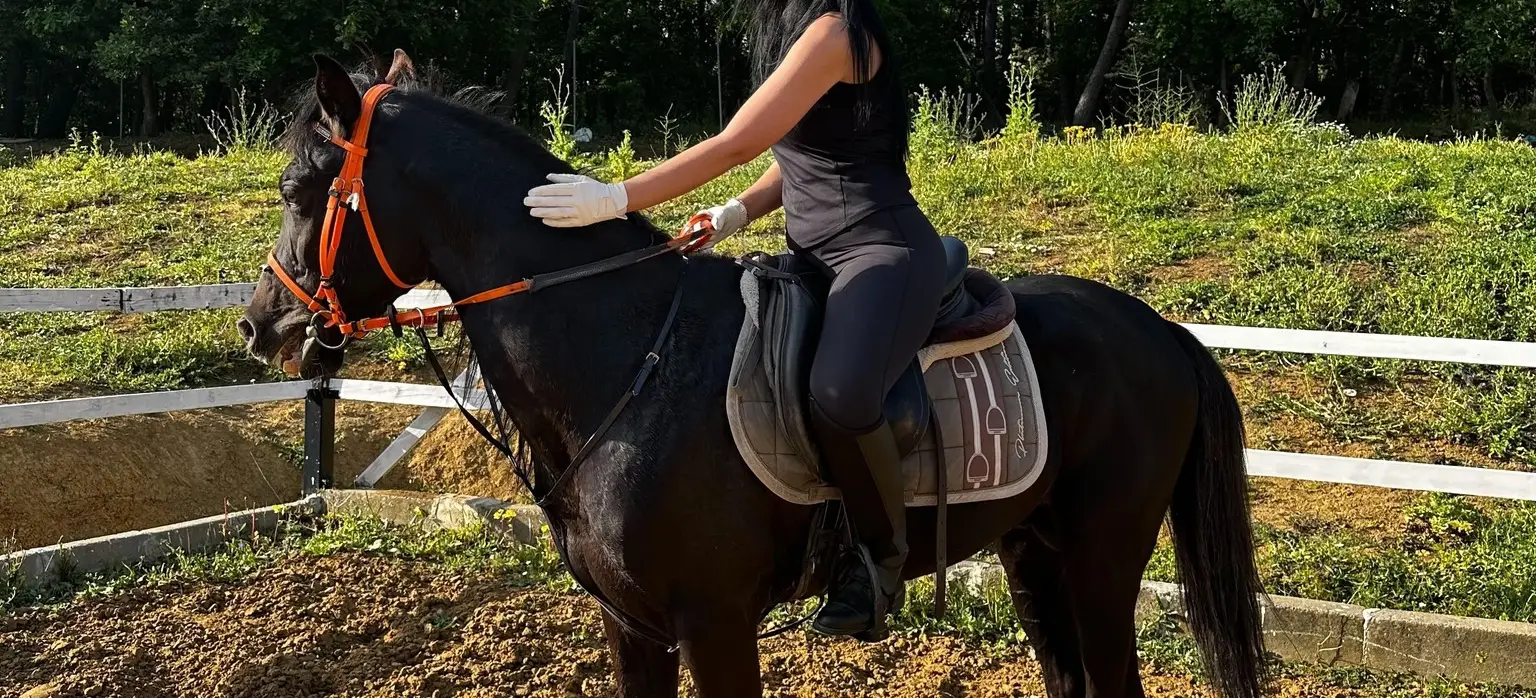
If this is your first time on a horse, clothing is probably one of the first things on your mind. Riding clothes do exist, but for a tour or a first lesson the right pieces from your own wardrobe are more than enough.
In this guide we explain what works, why it works and what to stay away from. The aim is simple. You should be comfortable and you should be safe.
The good news is that the same clothes usually do both. An outfit that protects your legs, keeps your foot in the stirrup properly and suits the weather is comfortable and safe at the same time. Read the sections below in order and do a quick check before you leave home.
Trousers
Your legs do most of the work on a horse. The saddle, the stirrup leathers and the horse’s body are in constant contact with them. That makes trousers the most important piece.
- Long and stretchy. Leggings, tracksuit bottoms or trousers with some stretch are comfortable.
- Avoid thick seams. Thick seams on the inside of the leg can rub and cause soreness.
- Jeans will do for a short ride, but stiff, tight jeans get uncomfortable fast.
- Wide legs can catch on the stirrup. If your trousers are loose at the bottom, tuck them into your socks.
If you start regular riding lessons, buying a pair of riding breeches makes sense. They have grip patches on the inner leg that help stop you sliding in the saddle.
Shoes and boots
Footwear is directly about safety. Your foot needs to come out of the stirrup easily and must not slide through it.
The ideal is a flat-soled boot with a small heel. The small heel stops your foot slipping forward through the stirrup.
Fine is a closed trainer with a flat sole. Most people ride in these for a short tour.
Not suitable are flip-flops, sandals, open-toed shoes, high heels and very thick treaded soles. A treaded sole can catch in the stirrup, and an open shoe does not protect your foot.
It is also a good idea not to come in shoes you have just bought and have not broken in yet. On a horse your foot stays at the same angle for a long time, and a shoe that pinches soon becomes a nuisance.
Then there are socks. A slightly longer sock that covers the ankle stops the boot from rubbing.
Helmet
Wearing a helmet when riding is recommended. This is not a rule of one particular farm but a widely accepted safety habit in riding. Even on a calm horse with a guide beside you, the chance of a fall is never zero.
At Kerem Bey you can ask about equipment on WhatsApp when you book. Bringing your own riding helmet is also an option. A cycling helmet is not designed for riding, so it does not do the same job. The British Horse Society, the long established UK riding charity, also stresses in its advice on clothing and helmets that equipment should be made for riding.
Gloves
Gloves are not required, but your hands are more comfortable holding the reins with them. You notice the difference on longer rides and in cold weather. Thin gloves with fingers and a grippy surface are enough. Thick ski gloves make it hard to feel the reins.
Layers for each season
In the north of Istanbul, by the forest and the sea, the weather can be a little different from the city centre. Layering is the most comfortable approach. Before you leave, check the latest forecast for Istanbul and choose your layers to match.
- Summer. A thin, breathable T-shirt or a light long-sleeved top. Instead of a hat for the sun, think about a bandana that fits under a helmet. Do not forget sunscreen.
- Spring and autumn. A light fleece or cardigan over a T-shirt. A layer you can take off once you warm up does the job.
- Winter. A thermal base layer, a fleece on top and a windproof jacket. It helps if the jacket is not too long or too loose, as it bunches up in the saddle.
If rain is possible, keep a thin rain jacket in your bag. Loose poncho-style raincoats can flap in the wind and startle the horse, so a fitted one is better.
A top layer with a zip is easy to open and close while you are on the horse.
Beach or forest
You can make small changes depending on the route too.
On horse rides in Belgrade Forest (Belgrad Ormanı) the trail is shaded and cool. A long-sleeved top helps against branches. After rain it can be muddy, so wear shoes you do not mind getting dirty.
On the beach ride sun and wind matter most. The breeze on the Black Sea coast can be cool, so bring a thin windbreaker even in summer. If you wear sunglasses, choose a pair that fits snugly.
The lake ride sits somewhere between the two. You ride through the forest and down to the water, so dressing as you would for the forest is enough.
What to wear for ATV
The rules for an ATV tour are similar, but dust and mud come first. Wear long trousers, closed shoes and a top against the wind. Leave white and nicer clothes at home. Sunglasses keep the dust out, and tying back long hair makes things easier in the wind. You can find the routes and durations in our ATV tour guide.
For children
The same logic applies to children. Long stretchy trousers, closed flat shoes and a cardigan if it is cool. A helmet matters even more for children. Be sure to ask about it when you book.
If you are coming with your child for the first time, there are more tips in our guide to horse riding for kids.
What to avoid
In short, these are the things that cause trouble on a horse.
- Skirts and dresses. They bunch up in the saddle and leave your legs unprotected.
- Shorts. The stirrup leathers rub the inside of your legs.
- Flip-flops and sandals. They do not protect your foot and slip out of the stirrup.
- Dangling jewellery. Long necklaces, hoop earrings and bracelets can catch on the reins or the saddle.
- Loose long hair. It blows across your face in the wind and is uncomfortable under a helmet. A low ponytail or a plait is the most comfortable.
- Loose things in your pockets. Carry your phone in a zipped pocket and leave your keys in the car.
What to bring
Apart from clothes, a small bag comes in handy. A bottle of water, sunscreen, spare socks and a clean T-shirt for the way home are enough. The bag does not come on the horse with you, you leave it at the farm.
Ready for the next step
Once your clothes are sorted, all that is left is choosing a route. You can find the routes, durations and prices together in our guide to horse riding in Istanbul. When you have decided, fill in the booking form or message us on WhatsApp at +90 546 414 00 89.